What Is Inbound Sales? A Practical Guide for Freelancers and Small Business Owners
April 7, 2026You have probably heard the advice: "Stop chasing clients. Let them come to you." But how do you actually make that happen?
That is exactly what inbound sales is about. It is a way of selling that fits how people already buy today. They search online, compare options, and often make decisions before they ever speak to a salesperson.
The shift is measurable. According to HubSpot’s 2025 Sales Trends Report, buyers increasingly rely on self-service information and prefer conversations focused on solving their specific problems rather than listening to generic pitches (HubSpot).
This guide explains what inbound sales is, why it works, and how you can apply it as a freelancer or small business owner.
What Is Inbound Sales?
Inbound sales is a customer-first approach where potential clients come to you through your content, online presence, or recommendations instead of you reaching out to them directly.
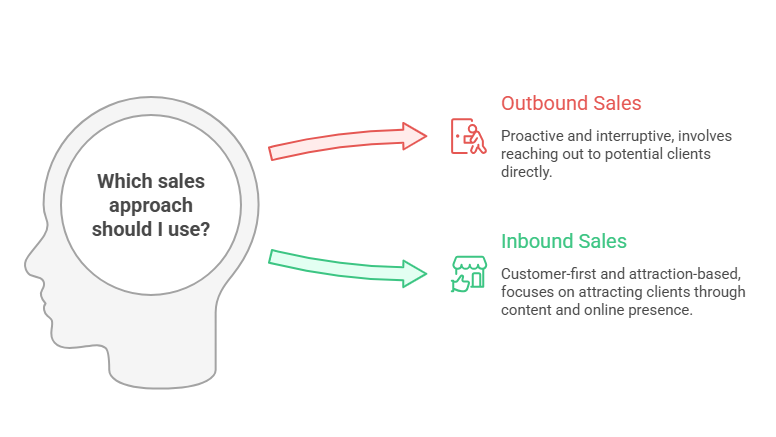
Think of it like this: outbound sales is knocking on doors. Inbound sales is setting up a shop where people already walk by, with something useful that makes them stop.
Instead of cold emails or calls, inbound focuses on attracting people who are already looking for a solution. By the time they contact you, they already understand what you offer and why it might help them.
This also explains the difference between inbound and outbound sales. Outbound is proactive and interruptive. Inbound is reactive and based on interest. HubSpot describes inbound sales as a shift from pushing messages to guiding buyers through their decision process (HubSpot).
Why Inbound Sales Works (With Data)
The main reason inbound works is simple: the leads are warmer.
Here are a few key numbers:
- Inbound lead conversion rates vary depending on the stage. Early-stage leads may convert at around 1–5%, while qualified, sales-ready leads can reach 10–20% or more (Default).
- 59% of sales professionals say inbound generates their highest quality leads, compared to 16% for outbound (Sender).
- 41% of B2B buyers consume multiple pieces of content before speaking to a salesperson (Martal).
What does this mean in practice?
When someone reaches out through inbound, part of the work is already done. They understand the problem, they trust your perspective, and they are closer to making a decision. In most cases, you are not starting from zero, you are continuing a conversation that has already begun.
The 4 Steps of an Inbound Sales Process
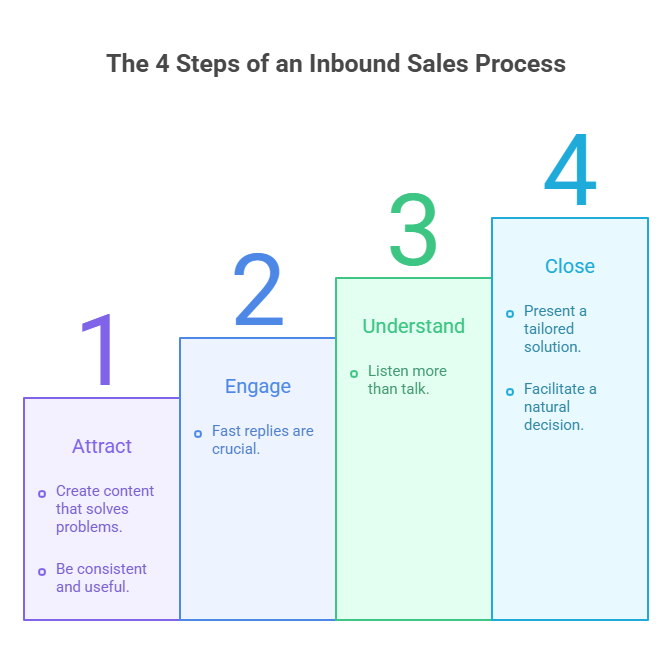
A good inbound sales process follows how buyers naturally make decisions. It can be broken down into four simple steps that mirror how people move from interest to decision.
1. Attract
This is where everything starts. If people cannot find you, they cannot choose you. Your goal here is simple: show up when your potential clients are already looking for answers.
The most effective way to do that is by creating content that directly addresses the problems they are trying to solve. Think about the questions your clients ask before they decide to work with you, and turn those into content.
Blog posts, short videos, and social content all work as long as they help the reader move one step closer to a solution. You do not need to post every day, what matters is being consistent and useful.
One clear, helpful piece of content is worth more than many that do not solve a real problem.
2. Engage
Once someone reaches out, timing matters, because responding quickly keeps the momentum of the conversation and increases your chances of qualifying the lead (InsideSales).
Even a simple reply like "Got your message, I’ll follow up shortly" is often enough to keep the conversation moving.
3. Understand
This is the step most people underestimate.
Before talking about your offer, focus on understanding the problem by asking questions and listening carefully so the prospect can explain what they are trying to achieve and what has not worked so far.
This context is what makes your solution relevant (Salesforce).
4. Close
At this point, you are not presenting a generic pitch. You are connecting your service directly to the problem the prospect described.
This is what makes the close feel natural. You are not trying to convince someone, you are simply helping them move forward with a decision that already feels right to them.
The Step Most People Skip: Analyzing Your Sales Calls
Here is a simple question: after a sales call, do you actually go back and look at what happened?
Most people don’t. They move on to the next task and trust their memory, but memory is not always reliable, especially when you are focused on the conversation in the moment.
This creates a gap where you can be attracting good leads and still losing deals without really understanding why.
For example, a call might feel smooth and positive, but then the prospect disappears and you are left guessing what changed.
When you do not review the conversation, it is hard to notice the details that matter, like a question you did not ask, an objection you missed, or a moment where the interest started to drop.
Tools like Onira AI help you look back at your calls and understand them better.

Quick Tips to Start Your Inbound Sales Strategy Today
- Focus on one channel. A consistent presence on LinkedIn or a simple blog is enough to begin.
- Create content based on real questions your clients ask before buying.
- Respond quickly to every inbound message.
- Review your calls and look for patterns you can improve.
Final Thoughts
Inbound sales takes time to build, but it changes how you sell.
Instead of chasing prospects, you create a system where people come to you already interested.
Instead of pushing offers, you focus on understanding problems and offering relevant solutions.
For freelancers and small business owners, this approach is practical because it does not depend on a large team or a complex setup.
Start with one piece of content. Pay attention to how you handle conversations. And make small improvements after each call.
That is how inbound sales becomes a long-term advantage.
FAQ
1. What is the difference between inbound and outbound sales?
Outbound sales involves reaching out to potential customers through calls, emails, or ads. Inbound sales focuses on attracting people who are already interested through content and online presence. According to HubSpot, inbound sales shifts the role of the salesperson from pushing messages to guiding buyers through their decision process (HubSpot).
2. How long does inbound sales take to work?
Inbound sales usually takes a few months to show results, especially if you rely on content and SEO. WebFX notes that consistent content creation typically starts generating traffic within three to six months. The results build over time rather than appearing immediately.
3. How can freelancers get inbound leads?
Freelancers can start by sharing useful content based on their expertise and engaging in conversations where their target clients are active. Over time, this helps build trust and makes it easier for people to reach out when they need help. Consistency matters more than scale.
4. How do you improve inbound sales calls?
Improving inbound calls comes down to asking better questions, listening carefully, and taking time to reflect on your conversations. When you truly understand the customer’s problem before offering a solution, your responses become more relevant and the conversation flows more naturally. Reviewing your calls helps you notice what worked and what you can do better next time.
5. What tools are needed for inbound sales?
You only need a few basic tools: a place to publish content, a way to manage conversations, and a method to review your calls. As you start improving, having something that helps you revisit your conversations and understand them better can make a big difference over time.
See your sales calls from a different perspective
Designed to surface insights that are hard to notice on your own.
See how it works